
Categories
SELLINGPublished November 6, 2026
Should You Stage Your Home Before Selling? What Northeast Ohio Sellers Should Weigh

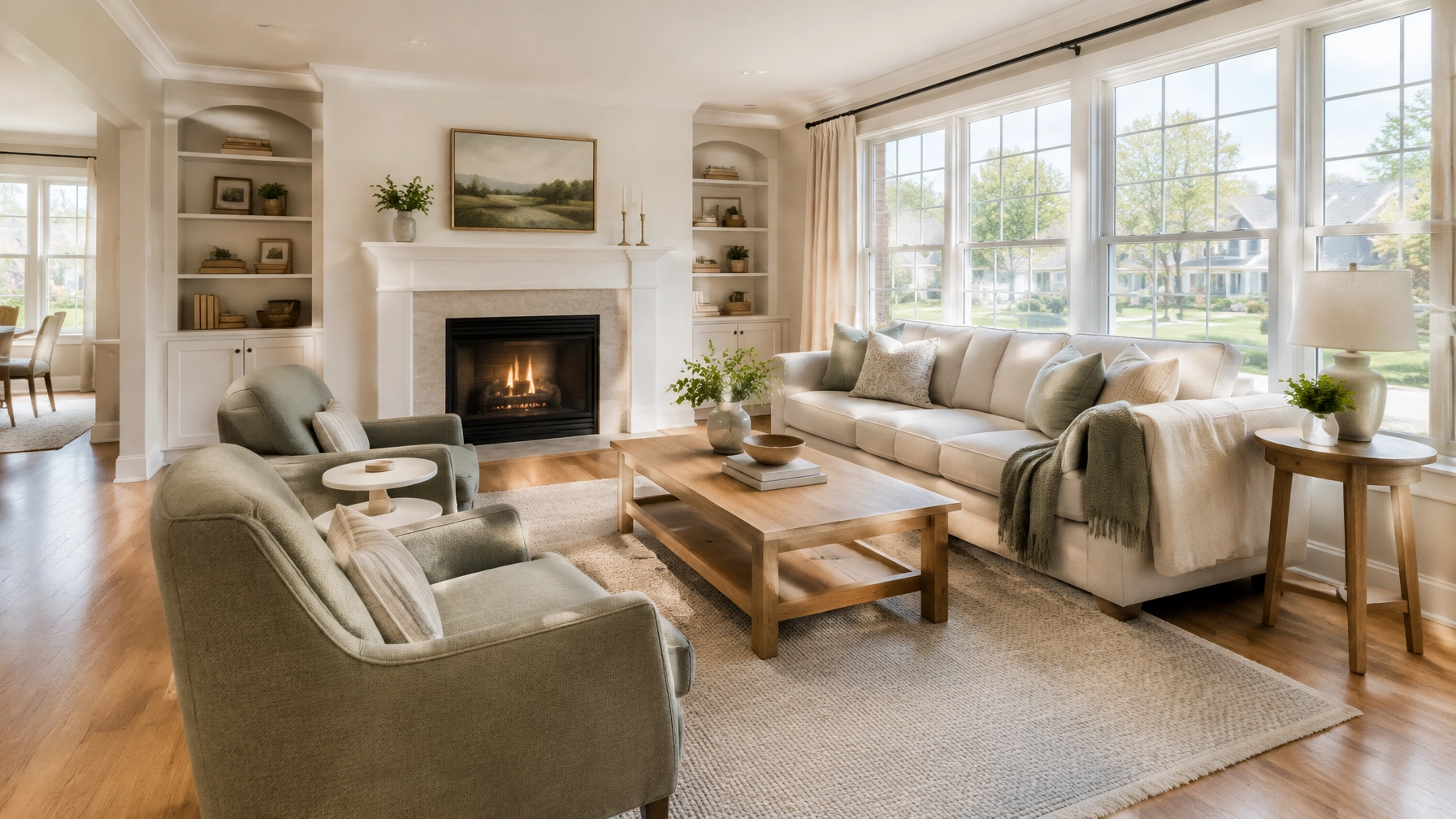
Should You Stage Your Home Before Selling? What Northeast Ohio Sellers Should Weigh

You may be focused on your asking price, mortgage payoff, and moving costs. But buyers often form an impression of your home before they ever step inside: from its listing photos. Staging can help your home look clear, inviting, and easy to understand, but paying for a full furniture rental is not always the right move.
The smart question isn’t simply “Should I stage?” It’s what kind of preparation will help your home compete, and what is worth spending in your situation?
What staging actually involves
Staging means presenting a home so buyers can quickly understand its layout and imagine living there. It can range from a thorough decluttering and furniture rearrangement to hiring a professional to bring in furniture and accessories.
DIY staging uses what you already own. You might remove extra chairs, clear countertops, simplify décor, and move furniture to open up pathways. It works best when your home is already in good condition and you can look at your belongings with a buyer’s eye.
Professional occupied staging typically starts with a walkthrough and recommendations. A stager may work with your existing furniture, suggest what to remove, and add selected décor or rented pieces.
Vacant-home staging brings in furniture and accessories to give empty rooms scale and purpose. Often, the goal is to stage only the most important spaces rather than furnish every room.
Staging is not the same as renovating. You are not trying to make the home look brand new or impose a particular design style. You are helping buyers notice the space, flow, and features without being distracted by clutter or wondering whether their furniture will fit.

What staging costs in Northeast Ohio
There is no single staging price. The cost depends on the size and condition of your home, how many rooms need attention, whether the home is occupied, and how long furniture needs to stay.
At the lower end, you may spend money on cleaning, storage, small repairs, paint touch-ups, or a one-time consultation. For example, Northeast Ohio design studio HAS Design Studio lists consultations starting at $99 and staging packages starting at $950. These are advertised starting prices, not guaranteed quotes for every property.
For a vacant home, MAP Home Staging lists limited staging at $1.30 per above-grade square foot, with a $2,405 minimum. Its package covers selected spaces, and the company notes that a monthly rental fee applies after the first 30 days.
These local examples show why it’s important to ask what a quote includes. Confirm the room count, delivery and removal, rental period, extensions, and any additional fees. Prices and packages can change, so get current written quotes before committing.
As another reference point, the National Association of REALTORS®’ 2025 Profile of Home Staging reported median staging-service spending of $1,500 among surveyed sellers’ agents who used a service. Agents who staged homes themselves reported a median of $500. These figures describe survey responses, not a guaranteed local price or a promise of return.
How staging can shape first impressions and perceived value
Buyers may see the photos before they see the house. Clear, well-presented rooms can help them understand the layout, imagine where furniture might go, and decide whether to schedule a showing.
In NAR’s 2025 survey, 83% of buyers’ agents said staging made it easier for a buyer to visualize a property as a future home. Photos were considered important by 73% of buyers’ agents, while 57% considered traditional physical staging important. These are agent-reported opinions, not proof that staging will raise the sale price of any particular home.
In fact, the report found that 41% of buyers’ agents said staging had no impact on the dollar value offered. The takeaway: staging may support a stronger presentation, but it does not replace good pricing, professional photos, or a home in reasonable condition.
A beautiful living room also won’t solve an asking price that’s out of step with nearby competition. For a bigger-picture view of how presentation and pricing work together, read our guide to why two similar houses can sell for different prices.
When staging matters most, and when it may matter less
Staging deserves closer consideration if:
- Your home is vacant. Empty rooms can be difficult to size up in photos and in person. Buyers may have trouble picturing how to use the space.
- The interior is dated or highly personalized. You may not need to renovate, but simplifying the presentation can help buyers focus on the home rather than your décor.
- Similar homes are competing for the same buyers. In a crowded price range, polished photos and welcoming rooms can help your listing stand out.
- The layout is hard to understand. A dining room used for storage or a spare room filled with exercise equipment may obscure how the space could function.
Staging may matter less when your home is already clean, well-maintained, attractively furnished, and priced appropriately for its competition. If buyer demand is strong and comparable listings are limited, full professional staging may not be necessary. Even then, clean surfaces, clear walkways, and good photography still matter.

Lower-cost ways to improve your home’s presentation
You can often make a meaningful difference without bringing in a full set of rental furniture:
- Remove excess belongings. Clear counters, crowded shelves, and furniture that makes rooms feel smaller. Put items you still need into storage.
- Deep-clean the home. Pay attention to windows, floors, bathrooms, kitchen surfaces, and lingering odors.
- Rearrange furniture. Make sure buyers can move through rooms easily and see their purpose.
- Make simple fixes. Repair loose handles, replace burned-out bulbs, and touch up scuffed walls where needed.
- Tidy the entry and exterior. Trim shrubs, sweep the porch, and make the front door feel welcoming.
- Ask about staging only key rooms. The NAR report identified the living room, primary bedroom, and kitchen as the rooms buyers’ agents most often considered important to stage. Depending on your layout, those may be the best places to focus your budget.

A practical decision framework for sellers
Before you hire a stager, consider these questions:
1. What impression do the photos make now? Ask someone who doesn’t live in the home to review the rooms honestly. Are they bright and easy to understand, or cluttered and difficult to picture using?
2. Is the home occupied or vacant? Occupied homes may need editing and rearranging more than new furniture. Vacant homes may benefit from staging a few central rooms.
3. What are competing homes doing? Look at active listings in your price range and area. If your home will be shown alongside well-presented competition, presentation may matter more.
4. What is the complete cost? Compare at least two local quotes when possible. Include rental extensions and any preparation work, not just the initial fee.
5. Does the likely benefit justify the expense? Consider your overall selling budget and the cost of carrying the home while it’s listed. Staging can help with presentation, but it cannot guarantee a faster sale or a higher offer.
A realistic Northeast Ohio example
Imagine a seller preparing an occupied home in a competitive suburban price range. The rooms are clean, but bulky furniture makes the living room feel tight, personal collections dominate the shelves, and the dining table has become a drop zone.
A full-home staging package may be more than this seller needs. A reasonable first step could be a pre-listing walkthrough, moving some belongings to storage, simplifying the shelves, rearranging the living room, and deep-cleaning before professional photography. If the photos still reveal a vacant or difficult-to-understand room, the seller could then price a consultation or limited staging for that space.
Another seller with a completely vacant house faces a different decision. A few carefully chosen rooms may help buyers understand the home’s scale and use. The right choice depends on the property and the local competition, not on a rule that every home must be professionally staged.
Staging is one part of your selling plan
The real decision is not “stage everything or do nothing.” It’s whether the cost and effort of a particular approach make sense for your home, price range, condition, and competition.
Start with a realistic review of the property. Declutter and clean first. Then consider whether a professional opinion or limited staging would improve the way buyers experience the home. Pair those steps with accurate pricing and quality photography.
If you’re preparing to sell, Milestone Property Group can help you build a plan for pricing, presentation, and marketing. Visit our selling services or request a home valuation to start planning for your Northeast Ohio sale.

Carly Sablotny
REALTOR | Milestone Property Group | Keller Williams Living | PLACE
or another way