
Categories
BUYING, INVESTING, SELLINGPublished January 18, 2026
New Construction vs. Resale in Northeast Ohio: The Real Cost Differences (Upgrades, Timelines, Warranties, Inspections)

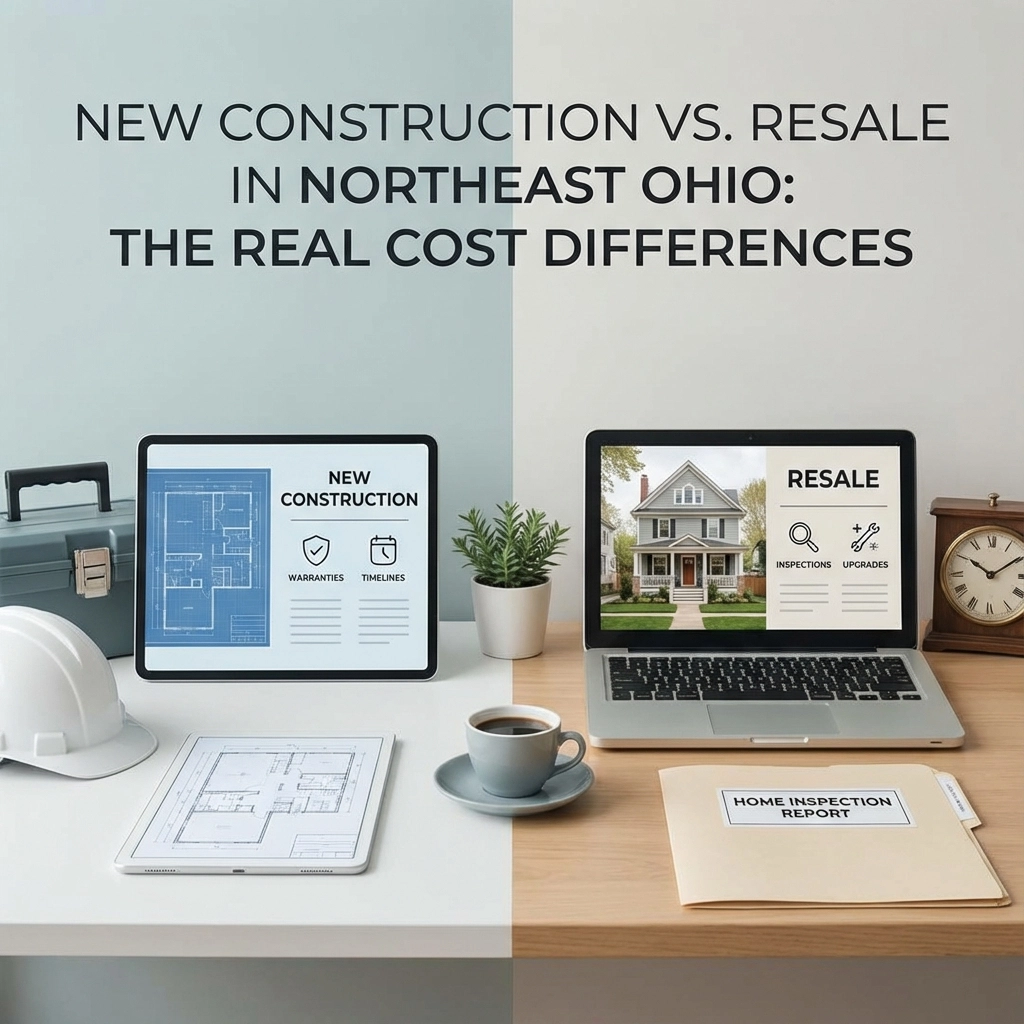
New Construction vs. Resale in Northeast Ohio: The Real Cost Differences (Upgrades, Timelines, Warranties, Inspections)
Most buyers in Northeast Ohio focus on the list price when comparing new construction versus resale homes. But the real cost differences go far beyond that initial number on the MLS listing.
You're about to discover the hidden expenses, timeline realities, and protection differences that can swing your total investment by tens of thousands of dollars: details that most agents won't break down until you're already committed to one path or the other.
The Real Price Gap (And Why It's Shrinking)
Here's what most buyers don't realize: the pricing gap between new construction and resale homes has dramatically narrowed in recent years. Nationally, new homes now cost only about 4% more than existing homes: a massive shift from the 40%+ premium we saw before the pandemic.
In Northeast Ohio specifically, you're looking at new construction typically ranging from $300,000 to $800,000, while comparable resale homes fall between $190,000 to $250,000. But that's just the starting point of your real cost analysis.
The catch? Those base prices for new construction rarely tell the complete story of what you'll actually pay.
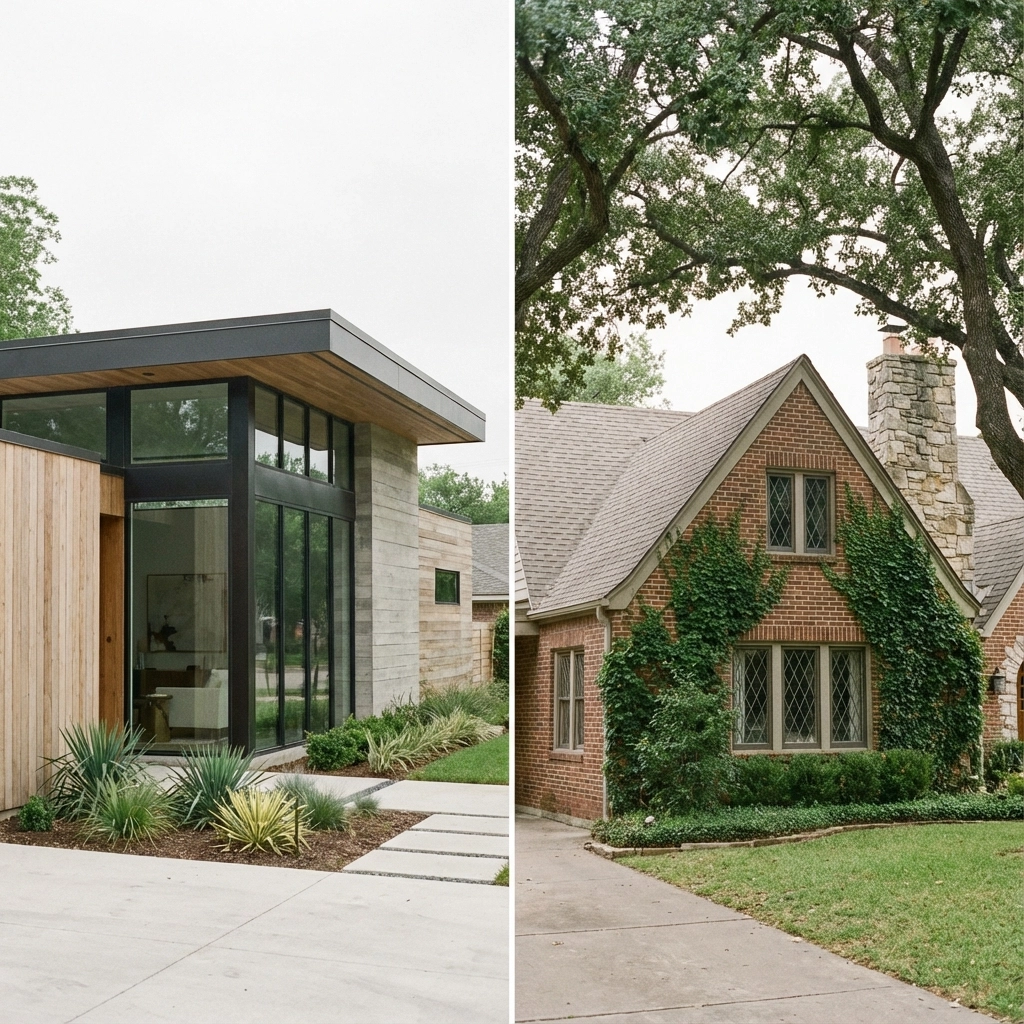
Upgrade Costs: The $40,000 Reality Check
New construction comes with a hidden cost structure that catches most first-time buyers off guard. Builders advertise base prices, but you'll face upgrade decisions that can add $20,000 to $40,000+ to your final purchase price.
Here's what you're really paying for:
Lot premiums: Corner lots, cul-de-sacs, or premium views can add $5,000 to $15,000 to your base price. This isn't negotiable: it's built into the builder's pricing structure.
Structural upgrades: Want a larger garage, additional bedroom, or different floor plan? Expect $10,000 to $25,000 in modifications.
Finish upgrades: Upgraded flooring, countertops, appliances, and fixtures easily run $15,000 to $30,000 above builder-grade standards.
Landscaping packages: Basic landscaping might be included, but anything beyond minimal grass and foundation plantings costs extra.
With resale homes, these features are already built in. You're not paying line-item charges for granite countertops or hardwood floors: they're part of the negotiated purchase price. Plus, you have more room to negotiate based on comparable sales and market conditions.
Timeline Reality: 6-12 Months vs. Move-In Ready
New construction requires patience. Most builders quote 6 to 12 months from contract to closing, and that timeline can extend due to weather, material delays, or change orders you request along the way.
This extended timeline affects your costs in several ways:
Rent overlap: You'll likely pay rent for several months while waiting for construction completion. At $1,200/month average rent in Northeast Ohio, that's $7,200 to $14,400 in additional housing costs.
Rate lock concerns: If mortgage rates increase during your construction period, your monthly payment could jump unless you've secured an extended rate lock (which may cost extra).
Temporary storage: Moving twice: from your current home to temporary housing, then to your new home: adds moving costs and potential storage fees.
Resale homes eliminate these timeline costs entirely. You can typically close in 30-45 days and move directly from your current housing situation.

Warranty Protection: Your Safety Net vs. Inspection Risks
Here's where new construction provides real value: comprehensive warranty coverage that resale homes simply cannot match.
New construction warranties typically include:
- 1-year coverage on workmanship and materials
- 2-year coverage on major systems (HVAC, plumbing, electrical)
- 10-year structural warranty on foundation and framing issues
This warranty protection translates to predictable maintenance costs in your first 5-10 years of ownership. When your HVAC system needs repair or replacement, it's covered. When minor settling causes cosmetic issues, the builder handles it at no cost.
Resale homes require you to budget for immediate and ongoing repairs without warranty backup. That 15-year-old furnace might last another 10 years... or it might fail next winter, leaving you with a $4,000 replacement bill.
The trade-off? You're accepting whatever the builder chooses for materials, layout, and finishes rather than inheriting someone else's upgrade choices and maintenance history.
Inspection Differences: Known Quantities vs. Hidden Issues
New construction eliminates traditional home inspection concerns about major systems, structural problems, or code violations. Everything meets current building standards, and you're getting new windows, roofing, HVAC, and plumbing systems.
But you'll still want a new construction inspection to verify:
- Proper installation of systems
- Completion of contracted work
- Code compliance
- Quality of workmanship
These inspections typically cost $400-600 and focus on construction quality rather than system condition.
Resale homes require thorough inspections to identify condition issues, potential repair needs, and safety concerns. You're dealing with:
- System age and condition: When will that 20-year-old roof need replacement?
- Previous maintenance: Has the home been properly maintained?
- Hidden problems: Foundation settling, electrical issues, or plumbing problems not visible during showings
Inspection findings give you negotiation leverage with resale homes: you can request repairs, credits, or price adjustments. With new construction, everything should be correct from day one, but you have less flexibility if you discover issues you don't like.

Property Tax Surprises: The Assessment Reality
New construction often comes with a property tax surprise that catches buyers off guard. Your initial tax assessment might be based on raw land value, but expect a reassessment within 12-18 months that reflects your home's full value.
This reassessment can increase your monthly escrow payment by $100-300/month, affecting your budget after you're already living in the home. Make sure you're budgeting for the full assessed value, not the temporary lower assessment.
Resale homes have established tax assessments, giving you predictable property tax costs from day one.
Energy Efficiency: Monthly Savings vs. Upfront Costs
New construction homes built to current energy codes typically result in 30-40% lower utility bills compared to older resale homes. In Northeast Ohio's climate, that translates to $50-150/month in heating and cooling savings.
Over 5 years, those energy savings can offset $3,000-9,000 of the initial price premium. Modern insulation, windows, and HVAC systems provide both comfort and cost benefits that older homes struggle to match without significant upgrades.
The Builder Incentive Advantage
New construction often includes incentives that effectively reduce your upfront costs:
- Closing cost assistance of $3,000-8,000
- Rate buydowns that reduce your mortgage payment for 1-3 years
- Appliance packages included at no additional cost
- No bidding wars against other buyers
These incentives provide real value but should be compared against the total cost difference and timeline considerations.
Making the Right Choice for Your Situation
Your decision comes down to risk tolerance and timeline flexibility:
Choose new construction if you:
- Want predictable maintenance costs for 5-10 years
- Can handle 6-12 months until move-in
- Prefer energy-efficient, low-maintenance systems
- Want to customize finishes and layout choices
Choose resale if you:
- Need to move within 30-60 days
- Want to see exactly what you're getting before purchase
- Prefer established neighborhoods with mature landscaping
- Want more negotiation flexibility on price and terms
The "cheaper" option depends entirely on your specific timeline, maintenance budget, and tolerance for the unknown. Factor in all these real costs: not just the listing price: before making your decision.
Both paths can lead to successful homeownership in Northeast Ohio. The key is understanding exactly what you're paying for and choosing the option that aligns with your financial situation and housing priorities.

Carly Sablotny
REALTOR | Milestone Property Group | Keller Williams Living | PLACE
or another way