
Categories
BUYINGPublished November 9, 2026
Moving to Akron: Neighborhoods, Housing, and What Buyers Should Know

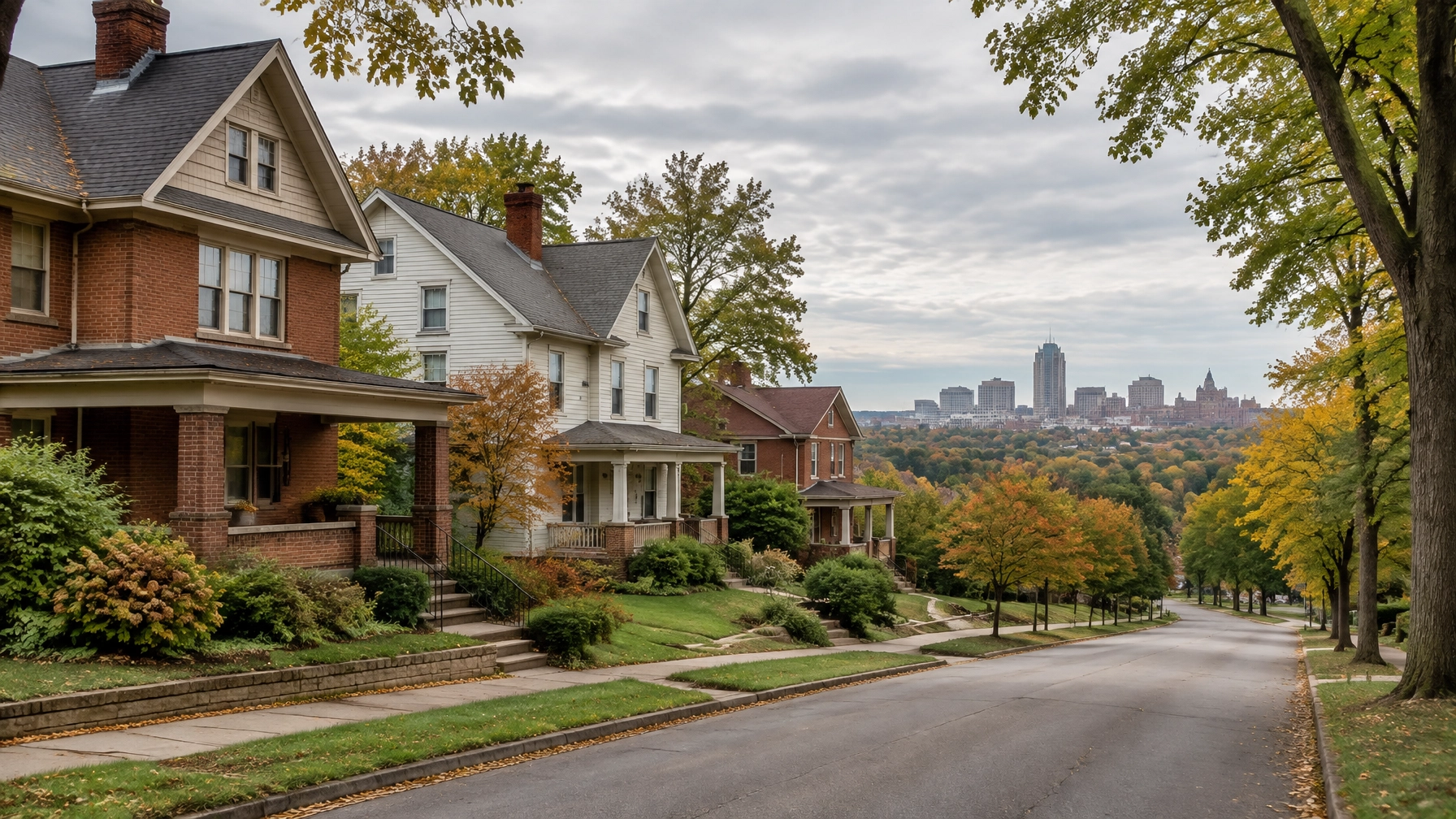
Moving to Akron: Neighborhoods, Housing, and What Buyers Should Know

What buyers often focus on first is the home’s price, bedroom count, and monthly mortgage payment. But moving to Akron means looking beyond the listing: the city’s neighborhoods differ in feel, housing condition, commute options, and tax details, and those differences can change what day-to-day life is like.
Akron offers historic homes, walkable business districts, established residential streets, and areas with a more suburban feel, often within the same city. Here’s how to compare them and what to check before you make an offer.
Akron has several different neighborhood experiences
Neighborhood names are a useful starting point, not a guarantee of what any particular block will feel like. Visit the property, explore nearby streets, and consider your daily routines before deciding that an area is the right fit.

Downtown and the University District
Downtown and the area around the University of Akron can suit buyers who want to be near campus, restaurants, events, and city services. You’ll find apartments and other urban housing options, along with older homes in surrounding neighborhoods. Consider practical details such as parking, noise, and how busy the immediate area gets during the school year or events.
The University of Akron is located near the city center. Akron is also a major healthcare hub: Cleveland Clinic Akron General, Akron Children’s, and Summa Health’s Akron Campus are among the area’s prominent medical centers and employers.
Highland Square and West Akron
Highland Square has a neighborhood business district and a more walkable feel around its shops, restaurants, and entertainment. The City of Akron has discussed improvements for the district, including possible security, beautification, and maintenance services through a proposed Special Improvement District. For the latest, check the city’s Highland Square update.
Nearby West Akron and West Hill include established residential streets and older homes. The city’s West Hill neighborhood profile describes historic housing, tree-lined streets, and nearby neighborhood amenities. Projects such as the improvements at Kerr Park are examples of local reinvestment. Still, revitalization can be uneven: look closely at the specific street, nearby businesses, and any construction or public projects that may affect your plans.
North Hill and North Akron
North Hill is known for a diverse, multicultural community and a neighborhood business district. Buyers may encounter older homes and a mix of property types. The city’s North Hill page and updates about Waters Park improvements offer context on ongoing neighborhood work.
North Akron can also be convenient for people who want access to northern routes and outdoor recreation. As in other parts of Akron, compare the home’s condition, the surrounding blocks, and your likely commute rather than relying on the neighborhood label alone.
Merriman Valley and areas with a suburban feel
If you prefer more space and easier access to outdoor destinations, look at homes in and around Merriman Valley and northern Akron. The character can vary by property, but this area offers a different feel from the denser central neighborhoods. Check how close the home is to major roads, shops, parks, and the trailheads you expect to use.
Kenmore, South Akron, and East Akron
These neighborhoods have their own community identity and may offer housing options at different price points. Buyers should give particular attention to the home’s maintenance history, nearby services, street conditions, and commute. The city’s Kenmore profile and park-reinvestment updates can help you learn about community initiatives, but they don’t replace an in-person visit and property-specific research.
Housing affordability is more than the list price
Akron’s housing stock includes older single-family homes, smaller houses, apartments, and some newer or renovated properties. A lower asking price can be appealing, but the home’s age and condition may bring additional costs after closing.

When comparing homes, build a realistic budget that accounts for the mortgage, property taxes, homeowners insurance, utilities, and likely repairs. For older homes, pay attention to the roof, heating and cooling systems, electrical and plumbing updates, drainage, basement moisture, windows, and signs of deferred maintenance. A qualified home inspector can help you understand the condition; consider specialist evaluations when a concern warrants a closer look.
Also compare the cost of owning in Akron with nearby suburbs. Cuyahoga Falls, Stow, Tallmadge, Green, Copley, and Bath each offer different housing options and community services. Some buyers will prefer the city’s older homes and neighborhood districts; others may prioritize a more suburban setting, a particular school district, or access to a different commute corridor. There is no reliable one-size-fits-all comparison: the exact property, tax jurisdiction, and your needs matter.
Walkability, parks, and getting around
Akron’s most walkable experiences tend to cluster around business districts and central areas, including Highland Square and parts of downtown. Many residential areas are more car-dependent, so test the route to groceries, work, school, and healthcare instead of assuming a short map distance means an easy daily trip.
Outdoor access is a significant draw. The city maintains parks and recreation facilities, while Cuyahoga Valley National Park offers trails, cycling, and other activities nearby. The National Park Service lists Boston Mill Visitor Center as about 18 miles from Akron, with an approximate drive of 25 minutes; actual travel time depends on your starting point, traffic, and destination within the park. Use the NPS directions and park information to plan specific visits.

Most commutes around Akron are easiest by car, with I-77, Route 8, and I-76 serving important regional routes. Transit may work for some trips: METRO’s system map shows local routes and Northcoast Express service toward Cleveland. Check the current route and schedule against your actual work hours before counting on transit as your main commute.
Research taxes by address, not by city name
Two homes that appear close together can fall under different tax jurisdictions or school districts. Before making an offer, use the Summit County Fiscal Office’s property search to review parcel and tax information, and use Ohio’s The Finder to check the address’s tax jurisdictions and school district. Confirm the results against the property’s records and ask your tax professional or the relevant office about anything unclear.
Akron’s municipal income-tax rate is 2.5%, according to the City of Akron Tax Division. The city says residents and partial-year residents age 18 and older generally must file an annual return, with limited exceptions. If you live in Akron and work elsewhere, or work in Akron but live in another community, check how withholding and tax credits apply to your situation. Municipal tax rules can differ from one community to another.
Who is Akron a good fit for?
Akron may be worth a close look if you want a range of housing styles, access to major hospitals and a university, city neighborhoods with local business districts, and proximity to outdoor recreation. It may also appeal if you’re willing to compare homes carefully and take on maintenance in exchange for a particular location or property style.
Consider nearby Summit County suburbs if you want a different mix of housing, services, commute options, or school-district boundaries. A buyer working downtown, a household commuting north, and someone who plans to visit the national park often may all have different best-fit locations.
Three buyer scenarios
- You want an urban lifestyle: Compare downtown and Highland Square. Visit at different times of day and check parking, noise, and the walk to places you’ll use regularly.
- You want a character home and room to personalize: Explore older homes in West Akron, West Hill, North Hill, or Kenmore. Include repair reserves in your budget and investigate the condition of major systems.
- You want suburban convenience or a park-oriented routine: Compare Merriman Valley and northern Akron with Cuyahoga Falls, Stow, and other nearby suburbs. Test your commute and drive to the specific trailheads, stores, or services you plan to use.
Akron homebuyer due-diligence checklist
Before you commit to a property:
- Visit the block on weekdays, evenings, and weekends.
- Test your commute during the hours you expect to travel.
- Review the home’s age, maintenance history, and condition; arrange appropriate inspections.
- Check property taxes, parcel records, and school-district information by exact address.
- Confirm how Akron or another municipality’s income-tax rules apply to your work and residence.
- Get insurance estimates and ask about any property-specific concerns.
- Look up nearby parks, transit routes, current projects, and services you’ll use.
- Compare the full monthly cost, not just the asking price, with homes in nearby suburbs.
Moving to Akron is less about choosing the “best” neighborhood and more about finding the right match for your budget and routine. Milestone Property Group can help you compare city neighborhoods with surrounding communities, evaluate the details of a specific property, and plan your next steps. Start with our homebuying resources or contact our team.

Carly Sablotny
REALTOR | Milestone Property Group | Keller Williams Living | PLACE
or another way