
Categories
BUYING, INVESTING, SELLINGPublished January 5, 2026
Mortgage Rate Buydowns in 2026 (Ohio): 2-1 vs 1-0 Buydowns, Seller Credits, and When They Make Sense

.webp)
Mortgage Rate Buydowns in 2026 (Ohio): 2-1 vs 1-0 Buydowns, Seller Credits, and When They Make Sense
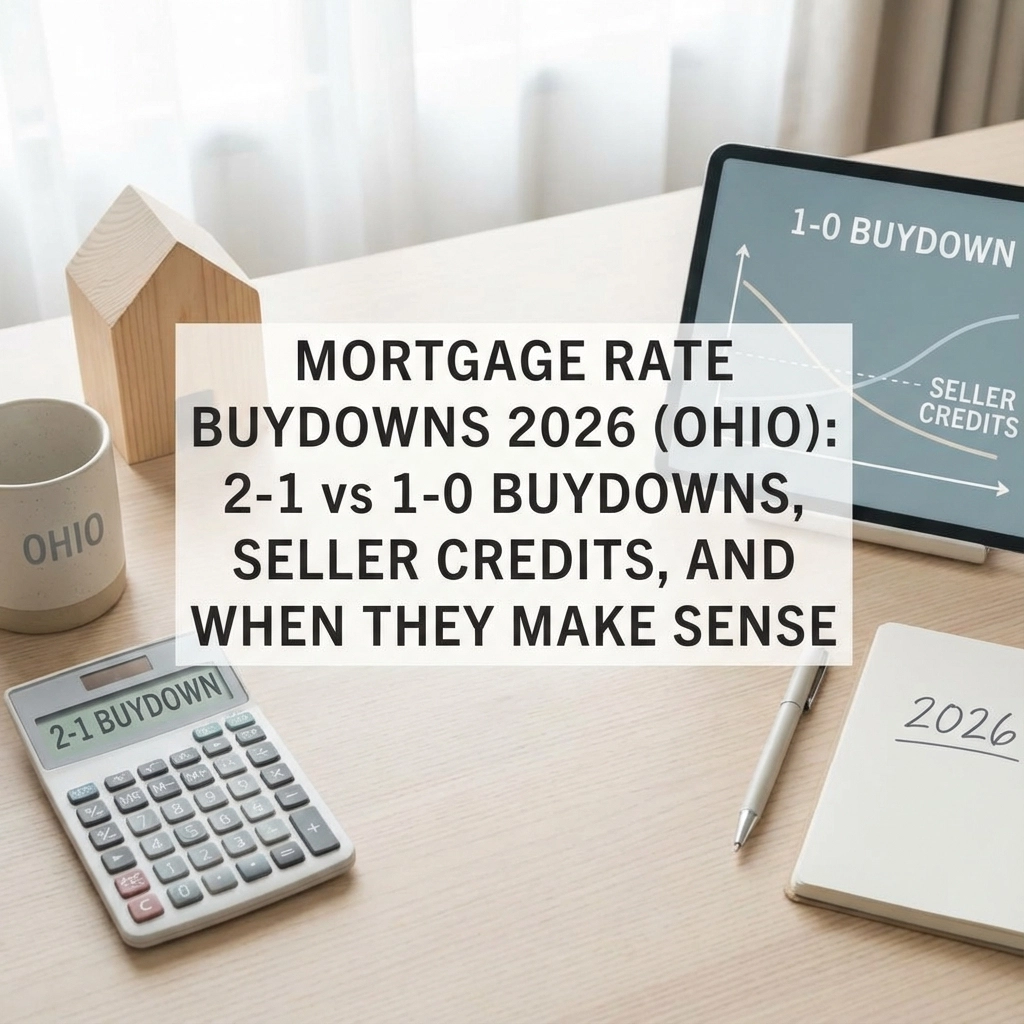
With mortgage rates hovering in the 6% range throughout 2026, Ohio buyers are increasingly seeing buydowns offered by sellers and builders. But what most buyers don't realize is that not all buydowns are created equal: and choosing the wrong type could cost you thousands.
What Are Temporary Rate Buydowns?
Temporary buydowns reduce your mortgage rate for the first one to three years, then your rate jumps to the original note rate for the remainder of the loan. This is completely different from buying permanent points, which lower your rate for the entire 30-year term.
The two most common temporary buydowns you'll see in Ohio:
- 2-1 Buydowns: Rate drops 2% in year one, 1% in year two, then full rate in year three
- 1-0 Buydowns: Rate drops 1% in year one, then full rate in year two
2-1 vs 1-0 Buydowns: The Numbers
Here's how each buydown affects your payments on a $350,000 loan at a 6.5% note rate:
2-1 Buydown Example:
- Year 1: 4.5% rate = $1,773/month payment
- Year 2: 5.5% rate = $1,988/month payment
- Year 3+: 6.5% rate = $2,212/month payment
1-0 Buydown Example:
- Year 1: 5.5% rate = $1,988/month payment
- Year 2+: 6.5% rate = $2,212/month payment
The 2-1 buydown saves you more money upfront but creates a bigger payment shock when it expires. The 1-0 provides more modest savings but an easier transition.
Who Pays for Buydowns?
Buydowns are typically funded through:
Seller Concessions: Sellers agree to pay the buydown cost as part of negotiations (common in buyer's markets)
Builder Credits: New construction builders offer buydowns as move-in incentives instead of price reductions
Lender Credits: Some lenders absorb buydown costs in exchange for higher rates after the temporary period
Buyer-Funded: You pay the buydown cost upfront to reduce initial payments
Two Common Scenarios in Ohio
Scenario 1: Seller-Offered Buydown You're buying a $400,000 home that's been on the market for 60 days. Instead of dropping the price by $8,000, the seller offers a 2-1 buydown. You get lower payments initially, but the seller keeps their list price for appraisal purposes.
Scenario 2: Buyer-Initiated Strategy
You qualify for the full payment but want lower costs while you're settling into the home, paying moving expenses, or waiting for a bonus. You request the buydown during negotiations.

Break-Even Analysis: When Buydowns Make Sense
The key question: Is the buydown cost worth the temporary savings?
For a 2-1 buydown on a $350,000 loan, you might save $8,500 in payments over two years but pay $7,000 in buydown costs. That's only $1,500 in net benefit: and you still face payment shock in year three.
Buydowns make the most sense when:
- You expect income to increase significantly within 2-3 years
- You're stretching to qualify and need lower initial payments
- You plan to refinance or sell before the temporary period ends
- The seller/builder is paying the cost as a concession
The Payment Shock Risk
The biggest danger with temporary buydowns is payment shock. When your rate jumps from 4.5% to 6.5%, your payment increases by $439/month. Many buyers focus on qualifying for the initial payment but forget to budget for the eventual increase.
Before accepting any buydown, run the numbers for year three and beyond to ensure you can comfortably afford the full payment.
Buydowns vs. Price Reductions
Sometimes a straight price reduction beats a buydown. Here's the math:
- $8,000 price reduction = $8,000 less principal, lower payment for 30 years
- $8,000 buydown = Temporary payment relief, then back to original payment
If you're planning to stay in the home long-term, price reductions often provide better value because they reduce your principal balance permanently.
2026 Market Reality in Ohio
With rates expected to remain in the 5.9% to 6.3% range throughout 2026, builders and sellers are increasingly using buydowns as incentives. You'll especially see them in:
- New construction communities with excess inventory
- Homes priced above $400,000 where payment relief has bigger impact
- Markets like Cleveland, Columbus, and Cincinnati where competition varies by price range
Questions to Ask Your Lender
Before agreeing to any buydown:
- What's the total cost of the buydown?
- Who's paying for it (you, seller, or builder)?
- What will my payment be in years 1, 2, and 3+?
- Can I qualify for the full payment without the buydown?
- Are there better alternatives like permanent points?

The Bottom Line
Temporary buydowns can provide meaningful payment relief during your first few years in a home, but they're not magic bullets for affordability. The key is understanding exactly what you're getting and planning for the payment increase.
In Ohio's 2026 market, buydowns work best for buyers who expect income growth, plan shorter-term ownership, or receive them as seller concessions. If you're stretching to qualify for the initial payment, you might be better served by looking at lower-priced homes.
Important Note: This article provides general information only. Buydown terms, costs, and availability vary significantly by lender and market conditions. Always consult with a qualified mortgage professional to analyze your specific situation.
Ready to explore your home financing options in Ohio? The experienced team at Milestone Property Group can help you navigate buydowns, negotiate seller concessions, and find the right home within your budget. Contact us today to discuss your homebuying strategy and get connected with trusted local lenders who understand Ohio's market.

Carly Sablotny
REALTOR | Milestone Property Group | Keller Williams Living | PLACE
or another way