
Categories
BUYING, SELLING, INVESTINGPublished November 13, 2026
How to Prevent Frozen Pipes: A Northeast Ohio Homeowner's Winter Checklist

How to Prevent Frozen Pipes: A Northeast Ohio Homeowner's Winter Checklist

You may focus on the forecast when winter arrives, but the real risk to your home can be hidden behind a wall, under a sink, or in an unheated garage. In Northeast Ohio, a hard freeze can turn an overlooked plumbing vulnerability into a costly cleanup. The good news: a few practical steps before and during cold snaps can lower the risk, and knowing what to do if a pipe freezes can help limit damage.
Find the pipes most at risk
Water pipes are most vulnerable where they are exposed to cold air or separated from the home's heat. Take a careful look at:
- Pipes in exterior walls, especially under kitchen or bathroom sinks and near drafty areas.
- Crawl spaces, basements, and attics with inadequate insulation or air leaks.
- Unheated garages, including pipes running along garage walls or above the garage.
- Outdoor hose bibs and sprinkler lines that still contain water.
- Vacant or lightly heated homes, where the heat may be turned down or a problem may go unnoticed.
- Previously frozen sections, which may be more vulnerable during another cold spell.
A faucet that seems far from the furnace may still connect to plumbing routed through a cold exterior wall. Trace the supply lines where you can, and pay particular attention to places with drafts or little insulation.
Prepare your plumbing before winter
A little preparation is easier than dealing with a frozen line during a cold snap.

Disconnect garden hoses. Drain them and store them indoors. If your outdoor faucet has an indoor shutoff valve, close it, then open the exterior faucet to let remaining water drain. Follow the instructions for your specific plumbing setup; not every home has the same arrangement.
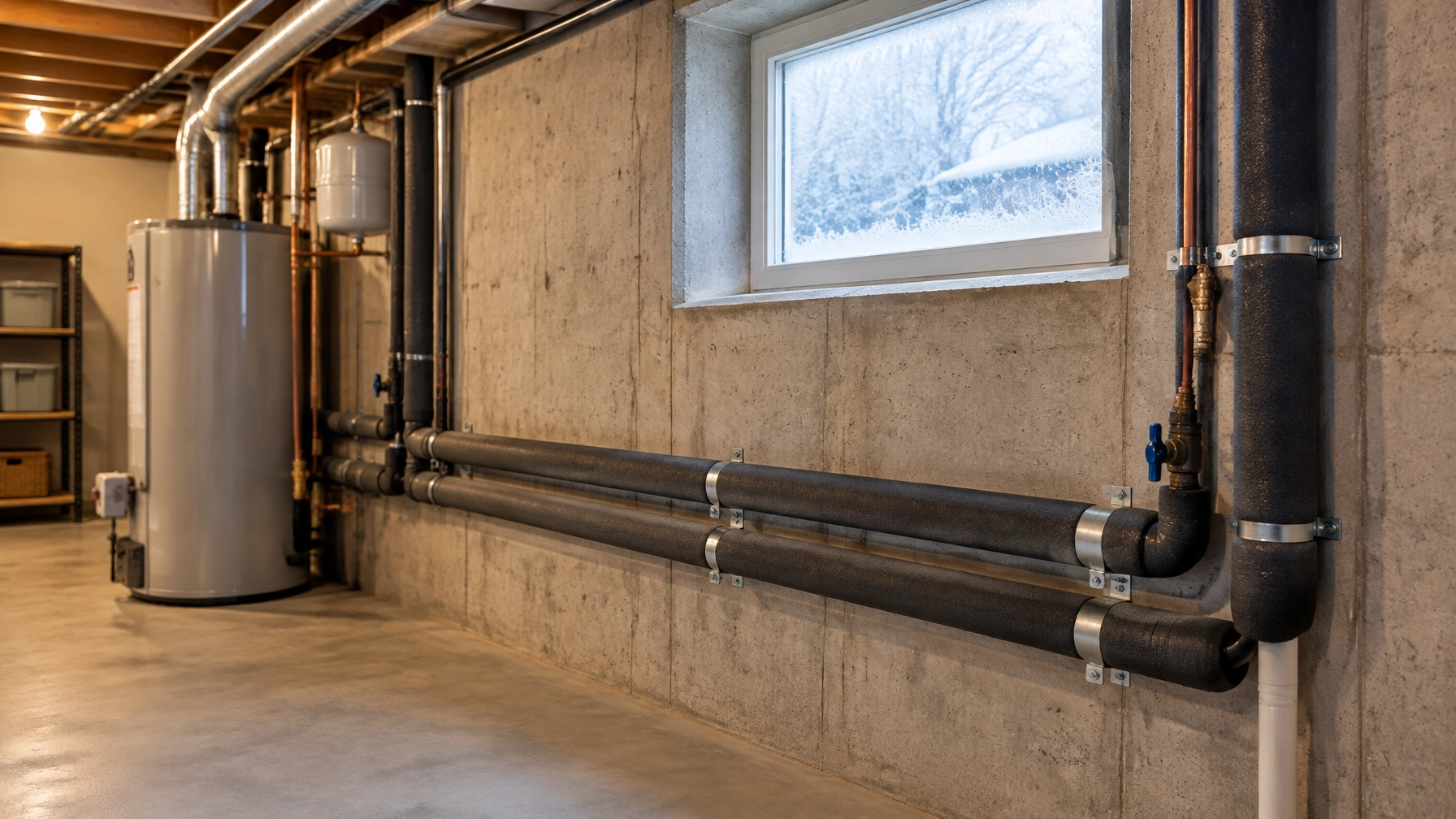
Insulate exposed pipes. Fit appropriate foam sleeves around accessible plumbing in basements, crawl spaces, and garages. Seal gaps in the insulation so cold air cannot reach the pipe. For heat tape or heat cable, choose a product approved for the intended use and follow the manufacturer’s instructions. If you are unsure how to install it safely, ask a qualified professional.

Seal drafts near plumbing. Check for cold air entering around doors, windows, foundation openings, and places where pipes or wires pass through walls. Use suitable caulk or sealant, but do not block required appliance vents.
Know where your main water shutoff is. It is often near the water meter, but its location varies. Keep the area accessible, make sure household members know how to operate it, and label it if needed. In a burst-pipe emergency, finding it quickly can help limit water damage.
The Cleveland Water Department’s winterizing guidance offers additional steps for outdoor plumbing and pipes in your home.
Take precautions during hard freezes
When temperatures drop sharply, keep your home’s heat steady. Avoid turning the thermostat down overnight, and keep the garage door closed if plumbing runs through or beside the garage.
For pipes beneath sinks on exterior walls, open cabinet doors so warmer room air can reach the plumbing. Move cleaning products and other hazards out of reach of children and pets.
If a pipe is especially exposed or has frozen before, a slow, pencil-thin trickle from a faucet on that line may help keep water moving during severe cold. It is not a substitute for insulation, and it may not be appropriate for every plumbing setup. If you are uncertain, ask a plumber for advice.
Protect a vacant home while you’re away or selling
An empty home can face extra risk: heat may be reduced, a small leak may go unnoticed, and no one may be there to respond quickly. Before leaving for an extended period, arrange for a trusted person to check the property regularly. Keep the heating system operating at a consistent temperature; Cleveland Water recommends keeping a vacant home at 55°F or higher.
If you are selling a vacant property, do not assume the heat is on or that winter preparations have been handled. Confirm who is monitoring the home, how they will access it, and who can respond if the heat fails. Make sure your insurer knows the home will be vacant and ask whether your policy has requirements or limitations for an unoccupied property.
Shutting off the water and draining the plumbing may be appropriate in some circumstances, but it should be done correctly. Ask a licensed plumber or your insurer what makes sense for your home and how to protect fixtures and appliances. If you are buying a home that has been vacant, ask about its winterization and utility history as part of your planning. Milestone Property Group’s homebuying services can help you navigate a Northeast Ohio purchase.
Recognize the early signs of a frozen pipe
A faucet that suddenly produces only a trickle, or no water at all, can be an early warning. Other clues include frost on an exposed pipe, a pipe that looks swollen, or unusual odors coming from a drain when water cannot move through the line.
If you notice a problem, check other faucets to help determine whether it appears to affect one fixture or a larger part of the home. A single faucet with little or no flow may point to a frozen section nearby, but only a plumber can confirm the cause.
What to do if a pipe freezes
Act promptly, but do not use an open flame. The American Red Cross recommends using safe, gentle heat to thaw a frozen pipe.
- Keep the affected faucet open. As ice melts, water needs a way to flow out.
- Warm the pipe carefully with a hair dryer, heating pad, or warm towels. Start near the faucet and work toward the colder section. Keep electrical devices away from standing water and follow the product’s safety instructions.
- Avoid torches, open flames, and high heat. These can cause a fire or damage the pipe.
- Call a licensed plumber if the pipe is inaccessible, you cannot thaw it safely, or you suspect it has cracked.
Stay alert as the pipe warms. Water may begin flowing before you can see a leak, so check the surrounding area.
What to do if a pipe bursts
If a pipe breaks, shut off the main water supply as soon as you can. If water is near outlets, appliances, or wiring, avoid the area and contact emergency services or a qualified professional if there is an immediate safety risk. Call a plumber, move belongings away from the water if it is safe, and take photos of the damage.
Contact your insurance company promptly and keep records of your calls, repair work, and expenses. Your insurer may ask you to take reasonable steps to prevent further damage, such as arranging temporary repairs. Do not discard damaged items until you have documented them and confirmed what your insurer needs.
Review your insurance before a freeze
Coverage depends on your policy, its exclusions, and the circumstances of the loss. Ask your insurance agent whether damage from a frozen or burst pipe is covered, what steps you are expected to take to maintain heat or inspect a vacant home, and what your deductible is. Also ask whether you need separate coverage for sewer or drain backup or flooding; these are not necessarily covered by a standard homeowners policy.
The Ohio Department of Insurance homeowners guide is a useful starting point, but your insurer can explain how your own policy applies.
Quick frozen-pipe prevention checklist
Before winter:
- Disconnect and drain garden hoses.
- Shut off and drain exterior water lines where your plumbing setup allows.
- Insulate exposed pipes in garages, crawl spaces, basements, and other cold areas.
- Seal drafts around plumbing penetrations and nearby openings.
- Locate, label, and check access to the main water shutoff.
- Review your insurance requirements, especially if your home will be vacant.
During hard freezes or an extended absence:
- Keep the thermostat consistent; maintain heat in vacant homes.
- Open sink cabinet doors where plumbing is vulnerable.
- Keep garage doors closed if pipes are exposed to garage temperatures.
- Consider a slow drip for especially vulnerable plumbing during severe cold.
- Arrange regular checks on a vacant property.
A few minutes of preparation can help protect your pipes, and knowing where your shutoff is and whom to call can make a difficult situation easier to manage.

Carly Sablotny
REALTOR | Milestone Property Group | Keller Williams Living | PLACE
or another way