


Categories
BUYING, MORTGAGEPublished July 24, 2026
How Much Money Do You Really Need to Buy a House in Ohio? (2026 Complete Breakdown)


How Much Money Do You Really Need to Buy a House in Ohio? (2026 Complete Breakdown)
Most buyers in Northeast Ohio start their home search with a massive misconception: they think they need to save 20% of the purchase price before they can even talk to a lender.
If you’re looking at a $400,000 home in Hudson or Solon, that’s $80,000 in cash. For most people, that's not just a hurdle; it’s a brick wall.
But here is the reality check: The 20% down payment is a myth. In 2026, the median down payment for first-time buyers in Ohio is hovering closer to 9%, and many of our clients at Milestone Property Group are closing on homes with significantly less than that.
However, what many buyers forget, and what some lenders won't emphasize until you're deep in the process, is that your down payment is only one piece of the puzzle. You need "Cash to Close," and that includes a stack of fees, deposits, and reserves that go far beyond that initial percentage.
If you want to walk into a showing in Lakewood or Rocky River with actual confidence, you need to know the real cost. Here is the exact breakdown of the cash you’ll need to buy a house in Ohio today.
1. The Down Payment Spectrum: From 0% to 20%
The biggest chunk of your cash goes here, but you have more options than you realize.
The 0% Down Programs
Yes, they still exist in 2026.
- VA Loans: If you are a veteran or active-duty service member, you can often buy with $0 down.
- USDA Loans: These are for "rural" areas, which includes more of Northeast Ohio than you might think: parts of Medina and Lorain counties often qualify.
- OHFA (Ohio Housing Finance Agency): This is the secret weapon for Ohio buyers. OHFA offers a "Your Choice!" program that provides 2.5% or 5% of the purchase price as assistance. If you’re using a 3% down conventional loan and get a 2.5% OHFA grant, your actual out-of-pocket down payment drops to almost nothing.
Low-Down Conventional & FHA (3% to 3.5%)
For most buyers in Macedonia or Twinsburg, this is the sweet spot.
- Conventional 97: Requires just 3% down. On a $350,000 home, that’s $10,500.
- FHA Loans: Requires 3.5% down ($12,250 on that same $350k home). FHA is often more lenient on credit scores, making it a go-to for those still building their profile.
The 20% Traditionalist
You do this to avoid Private Mortgage Insurance (PMI). While it saves you a few hundred dollars a month on your payment, it eats up $70,000 to $80,000 in liquid cash upfront for an average suburban home. In today’s market, many buyers find it smarter to put 5% down and keep that extra $60k in a high-yield account or for home renovations.
2. Closing Costs: The "Invisible" Expense
This is where buyers get blindsided. Closing costs are the fees paid to your lender, the title company, and the government to finalize the loan.
In Ohio, you should plan for 2% to 4% of the purchase price in closing costs.
On a $350,000 home, that’s an additional $7,000 to $14,000. This covers:
- Lender Fees: Origination, processing, and credit report fees.
- Title Insurance & Fees: Ensuring the seller actually owns the house and protecting you from future claims.
- Government Recording Fees: Paying the county to record your new deed.
- Prepaids: This is a big one. Lenders usually require you to pay 12 months of homeowners insurance and several months of property taxes upfront into an escrow account.
Insider Tip: In the 2026 market, we are seeing a return of Seller Concessions. We can often negotiate for the seller to pay a portion of these costs, which can drastically reduce the cash you need at the finish line.
3. The Upfront "Out-of-Pocket" Costs
Before you even get to the closing table, you'll be writing checks. These aren't part of your loan; they are paid in real-time.
Earnest Money Deposit (EMD)
Think of this as your "security deposit" for the contract. It shows the seller you’re serious. In Northeast Ohio, 1% to 2% of the purchase price is standard.
- Reality Check: For a $350,000 house, expect to put down $3,500 to $7,000 within 48 hours of your offer being accepted. Don't worry: this money is credited toward your down payment at the end, but you need it available now.
Home Inspections
You should never buy a home without an inspection. While we don't handle POS inspections (per local regulations), a general home inspection is vital.
- General Inspection: $400–$600.
- Radon Testing: $150–$200.
- Sewer Scope: $200–$300 (highly recommended in older areas like Lakewood).
- Total: Plan for $800 to $1,200 in non-refundable inspection fees.
The Appraisal
Your lender will hire an appraiser to ensure the house is worth what you’re paying. You usually pay for this upfront or it’s tacked onto closing costs.
- Cost: $500–$700.
4. The "Safety Net" (Reserves)
Lenders don't just want to see that you have enough money to buy the house; they want to see that you won't be broke the day after you move in.
Many loan programs require "Reserves": liquid cash left in your bank account after all costs are paid. Usually, they like to see 2 to 3 months of your future mortgage payment (Principal, Interest, Taxes, and Insurance - PITI) sitting in your account.
If your new mortgage is $2,800/month, you’ll want at least $5,600 to $8,400 in "buffer" money. Even if the lender doesn't require it, we recommend it. From moving trucks to the inevitable "first trip to Home Depot," you’ll need it.
The Big Picture: A Real Ohio Example
Let’s look at a typical scenario for a first-time buyer purchasing a $300,000 home in a community like Macedonia or Twinsburg using a 3% down conventional loan.
| Item | Estimated Cost |
|---|---|
| Down Payment (3%) | $9,000 |
| Closing Costs & Prepaids (~3%) | $9,000 |
| Earnest Money Deposit | $3,000 (Applied to the $9k down payment) |
| Inspections & Appraisal | $1,500 (Paid during the process) |
| Total Cash Needed | $19,500 |
But wait... If we negotiate a $5,000 seller credit for your closing costs, your total cash needed drops to $14,500. If you qualify for an OHFA grant, it could drop even further.
The Milestone Advantage
Knowing the numbers is the first step, but navigating the 2026 market requires an expert who knows how to leverage these programs to your advantage. At Milestone Property Group, led by Carly Sablotny, we don't just find you a house; we help you structure a deal that keeps more money in your pocket.
Whether you're looking at luxury estates in Solon or a starter home in Lakewood, you need a team that understands the financing landscape and the local market nuances.
Stop guessing how much you need. Let’s look at your specific situation and build a roadmap. Connect with us today to start your 2026 home-buying journey with total clarity.
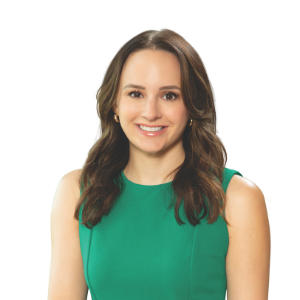
Carly Sablotny
REALTOR | Milestone Property Group | Keller Williams Living | PLACE
or another way