
Categories
BUYING, INVESTING, MORTGAGE, SELLINGPublished April 18, 2026
Trading Fences for Fields: What to Consider Before Buying More Land in Northeast Ohio

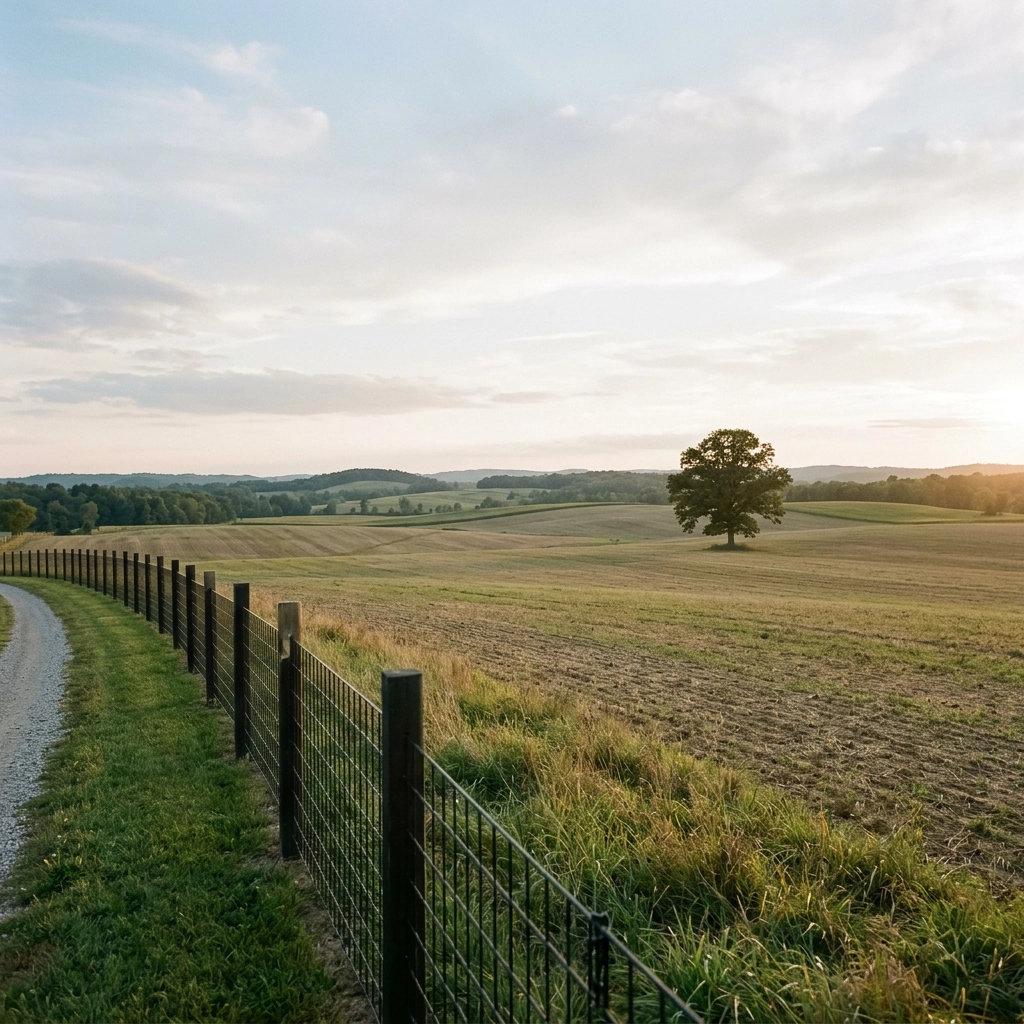
Trading Fences for Fields: What to Consider Before Buying More Land in Northeast Ohio
![[HERO] Trading Fences for Fields: What to Consider Before Buying More Land in Northeast Ohio](https://cdn.marblism.com/cGURQH9N_Et.webp)
Most home buyers looking to escape the tight-knit subdivisions of Solon or Hudson focus on the dream: a long, winding driveway, no neighbors in sight, and enough room for a massive pole barn or a small hobby farm. It’s an alluring vision of freedom. But the real transition from a suburban lot to a multi-acre property in Northeast Ohio goes far beyond just adding more grass to mow.
When you trade a quarter-acre for five, ten, or twenty acres, you aren't just buying a bigger yard; you are becoming the manager of your own mini-utility company and a steward of the land. What buyers forget is that the infrastructure they’ve taken for granted in more developed areas like Macedonia doesn’t exist out in the country.
If you’re ready to start your search: perhaps looking at available land in Leroy: you need to understand the complexities that most agents won't mention until you're already at the closing table.
The Invisible Infrastructure: Mastering Septic and Wells
In the suburbs, water comes from a tap and waste disappears down a drain. You pay a monthly bill, and the city handles the rest. On a rural property, you are responsible for the entire lifecycle of your water.
The septic system is the most critical component of a rural home. Unlike city sewers, a septic system requires regular maintenance and has a finite lifespan. Before you fall in love with a farmhouse, you must understand what type of system is in place. Is it an older leach field or a newer aerobic treatment unit? A failed septic system in Ohio can cost upwards of $20,000 to $30,000 to replace, depending on soil conditions and local health department regulations.
Then there is the well water. While skipping a monthly water bill sounds great, you are now responsible for the quality and quantity of your water. You’ll need to consider:
- Flow Rate: Can the well keep up with a family of four taking showers and running the dishwasher simultaneously?
- Water Quality: Northeast Ohio is known for "hard" water. You will likely need a sophisticated softening and filtration system to deal with iron, sulfur, or methane.
- The Pump: When the power goes out, your water stops. Many rural homeowners invest in generators specifically to keep their well pumps running during our frequent spring storms.

Zoning Laws and the Reality of Land Use
A common misconception is that "more land" equals "do whatever I want." In reality, rural zoning can be surprisingly restrictive. If your dream involves building a massive secondary suite for family, housing a collection of vintage tractors, or starting a small boarding stable, you must verify the zoning ordinances before making an offer.
Many townships have strict "setback" requirements, meaning you can't build your new outbuilding too close to the property line. Others have "livestock units per acre" rules. You might find that a three-acre lot in one township allows for horses, while a five-acre lot in the neighboring township does not.
However, there is a major financial upside to larger acreage: The CAUV (Current Agricultural Use Value) program. If you have enough acreage and can prove the land is being used for commercial agricultural purposes (even something as simple as timber management or hay production), you could see a massive reduction in your property taxes. This is a "pro-tip" that suburban buyers often miss, and it can save you thousands of dollars annually.
The Connectivity Gap and the True Cost of the Commute
We live in an era of remote work, which has fueled the exodus from suburban hubs like Beachwood to more rural settings. But don't assume that high-speed internet follows you everywhere.
Before you commit to a property, check the "last mile" connectivity. Fiber optic lines often stop at the edge of town. You may find yourself relying on satellite internet or point-to-point wireless, which can be inconsistent during heavy Ohio snowfalls or thunderstorms.
Beyond the digital connection, consider the "milk run." In places like Solon, you are five minutes from a grocery store and ten minutes from a hospital. Out in the fields, those distances can triple. If you’re used to running out for a single gallon of milk, you’ll quickly learn the art of "bulk buying." This distance also matters for emergency services; response times for fire and EMS are naturally longer in rural areas, which can even impact your homeowner's insurance premiums.

Seasonal Maintenance: When the Driveway Becomes a Job
Northeast Ohio winters are legendary, but they hit differently when you have a 500-foot gravel driveway. In the suburbs, a small snowblower or even a shovel can handle a typical January morning. On a large lot, you are looking at a serious investment in equipment.
A standard riding mower will not cut it. When you move to five or more acres, you are entering "compact tractor" territory. You will need a way to plow snow, brush-hog tall grass, and maintain gravel paths. If you aren't prepared to spend $15,000 to $30,000 on a tractor and attachments, you’ll be spending a significant amount each year hiring out the work.
Landscaping also shifts from "manicured" to "managed." You aren't just weeding flower beds anymore; you are managing woodlots, clearing fallen trees after a windstorm, and ensuring that drainage ditches stay clear to prevent your yard from turning into a swamp during the spring thaw.
Why You Need a Fresh Survey and Soil Test
One of the biggest mistakes buyers make is relying on old maps or "visual" boundaries. In rural areas, fences are rarely exactly on the property line. They were often put up decades ago based on where it was easiest to dig a post hole, not where the legal boundary sits.
Always insist on a fresh boundary survey. You do not want to buy a property only to find out that the beautiful barn you thought was yours is actually six inches onto the neighbor's land. A survey provides the legal certainty you need to build fences or outbuildings with confidence.
Equally important is a soil test, specifically a "perc test" if you plan to build or expand. Northeast Ohio is famous for its heavy clay soil. This clay doesn't "perc" (absorb water) well, which can make installing a traditional septic system nearly impossible. Knowing the soil composition helps you understand drainage patterns: crucial if you want to avoid a basement that floods every time it rains or a backyard that stays mushy until July.

Is the Trade Worth It?
Trading the convenience of a suburban street for the peace of a rural field is a significant life change. It requires more work, more equipment, and a higher level of self-reliance. But for those who value privacy, the ability to see the stars at night, and the freedom to truly use their land, the transition is incredibly rewarding.
Whether you are looking at luxury estates in Chagrin Falls or more rugged acreage in Aurora, Milestone Property Group is here to help you navigate the "invisible" details that make or break a rural real estate deal.
Don't go into a land purchase blindly. Let us help you find the space you need with the expert guidance you deserve. Reach out to Milestone Property Group today to start exploring the possibilities across Northeast Ohio.

Carly Sablotny
REALTOR | Milestone Property Group | Keller Williams Living | PLACE
or another way