
Categories
BUYING, INVESTING, SELLINGPublished January 10, 2026
1031 Exchange in Ohio (2026): The Simple Timeline + Mistakes That Cost Investors Big

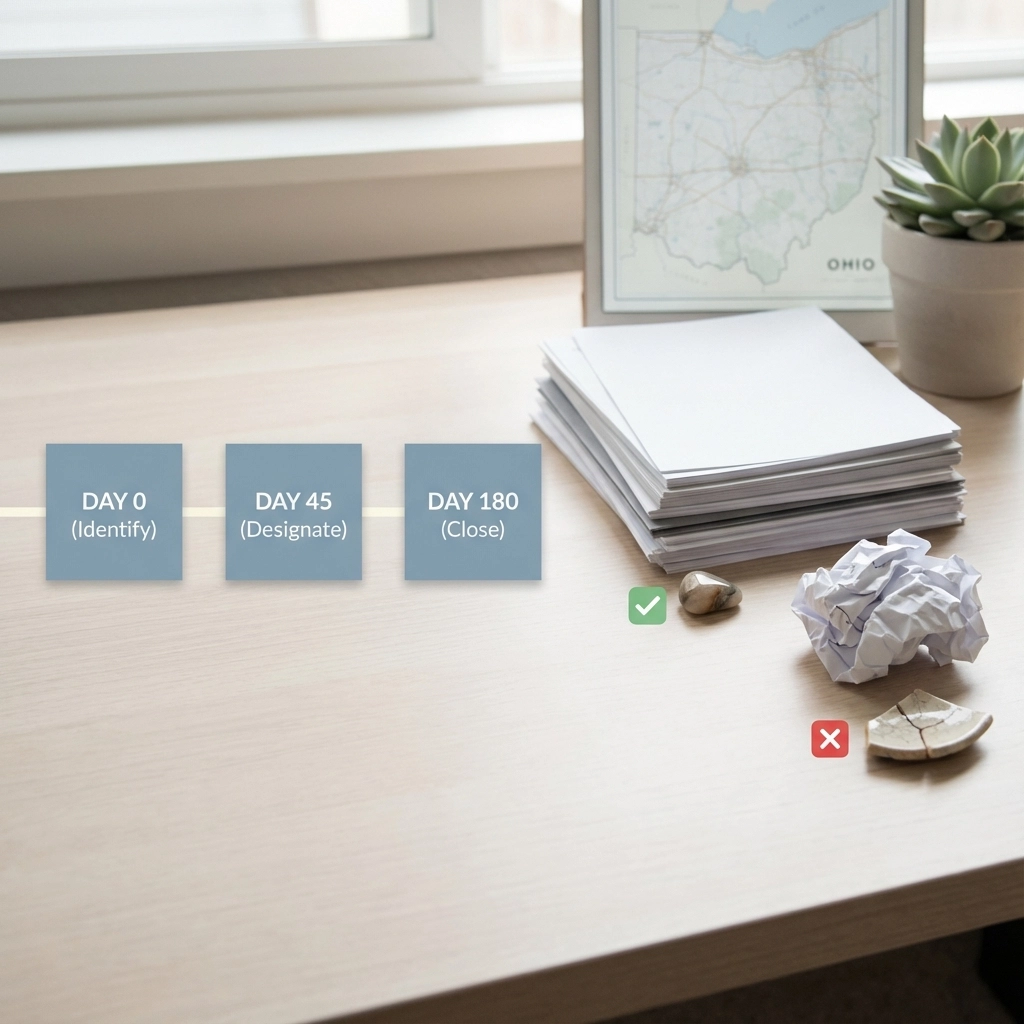
1031 Exchange in Ohio (2026): The Simple Timeline + Mistakes That Cost Investors Big
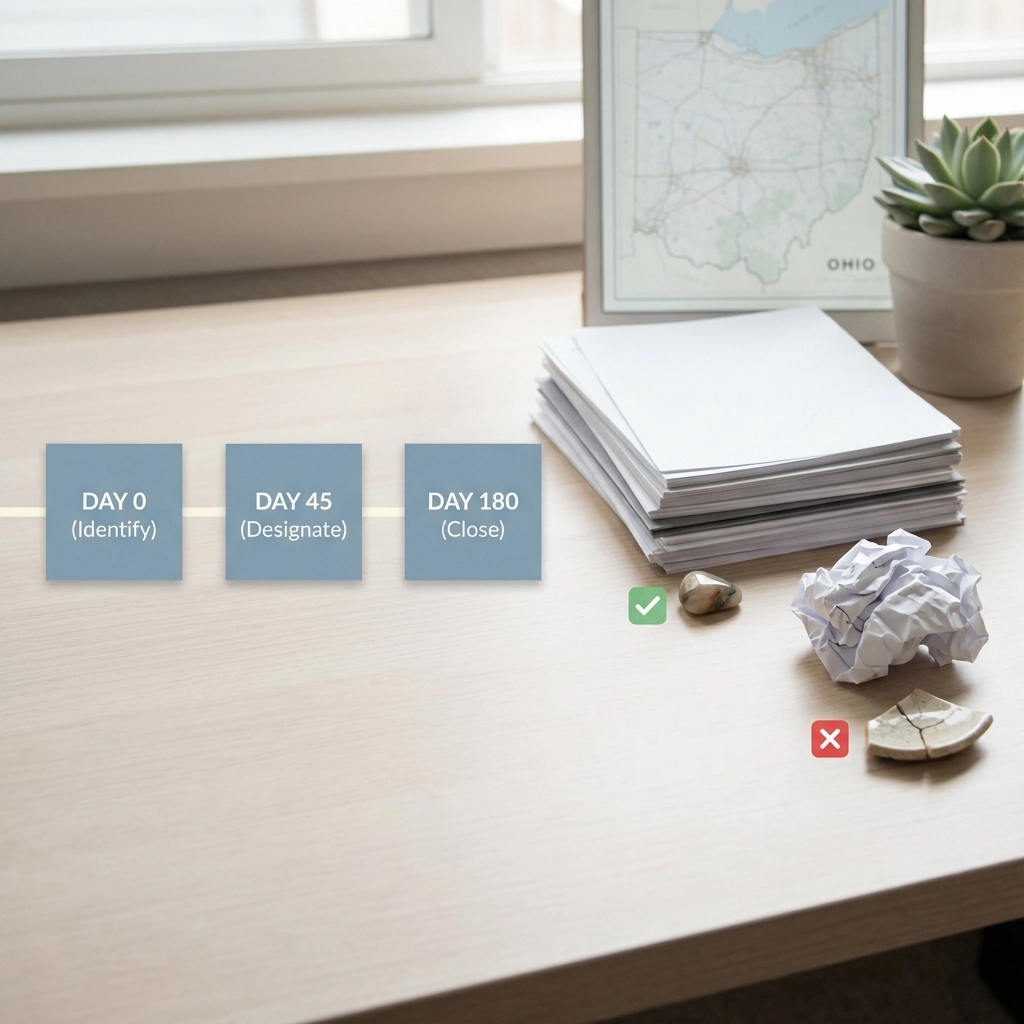
Most investors focus on finding the perfect replacement property... but the real cost of a 1031 exchange comes from timeline mistakes that trigger massive tax bills overnight.
Here's what you need to know about 1031 exchanges in Ohio for 2026: including the deadlines that catch even experienced investors off guard.
What Is a 1031 Exchange (The Basics)
A 1031 exchange lets you sell an investment property and buy another "like-kind" property while deferring all capital gains taxes. The IRS calls it a "like-kind exchange" because you're swapping one investment property for another.
The catch? You can't touch the money between sales. Everything must flow through a qualified intermediary, and you have strict deadlines that can't be extended: not even by one day.
In Ohio, you follow federal IRS rules with no state-specific modifications. That means the same timeline applies whether you're selling a duplex in Cleveland or a rental in Columbus.

The 1031 Exchange Timeline (Mark Your Calendar)
Here's where most investors trip up: there are two deadlines that run at the same time, starting from your closing date.
45-Day Identification Period
From the day you close on your sale, you have exactly 45 calendar days to identify your replacement property (or properties). Not business days: calendar days, including weekends and holidays.
You must submit this identification in writing to your qualified intermediary with either the full street address or legal description of each property. Verbal identification doesn't count.
The 3-Property Rule: You can identify up to three potential replacement properties of any value, or more properties if you follow the 95% rule (total value can't exceed 95% of what you sold).
180-Day Purchase Period
You have 180 calendar days from your original closing to complete the purchase of your replacement property. This period runs simultaneously with the 45-day period: not after it.
Critical timing note: If your tax return is due before the 180 days are up, that becomes your deadline instead. For example, if you sell on December 15, 2025, you must close on your replacement by April 15, 2026 (unless you file an extension).
The Expensive Mistakes That Cost Investors
Missing the 45-Day Deadline
This is the #1 exchange killer. Miss this deadline by even one day, and your entire exchange is disqualified. You'll owe all capital gains taxes immediately: potentially tens of thousands of dollars.
Real example: An investor selling a $400,000 rental property in Lakewood with $150,000 in gains could face a $35,000+ tax bill if they miss the 45-day mark.
Waiting Until Day 44 to Identify Properties
Smart investors submit their identification by day 35-40. Why? Mail delays, QI processing time, and the need to fix any documentation errors. Don't cut it close.

Touching the Money
The moment you receive proceeds from your sale (instead of your qualified intermediary), the exchange fails. The money must flow directly from buyer → QI → replacement property seller.
Choosing the Wrong Qualified Intermediary
Not all QIs are created equal. Look for experience with Ohio transactions, proper licensing, and segregated client accounts. A QI going bankrupt during your exchange means you lose your money and your tax deferral.
Ignoring the Tax Return Deadline
Many investors don't realize that their tax filing deadline can shorten the 180-day period. If you sell late in the year, plan accordingly or file for an extension to preserve your full timeline.
What Counts as "Like-Kind" Property?
The rules are more flexible than most people think. Any investment real estate can be exchanged for any other investment real estate. This includes:
- Single-family rentals
- Duplexes and multi-family properties
- Commercial buildings
- Industrial properties
- Vacant land held for investment
What doesn't qualify:
- Your primary residence
- Properties bought primarily for resale (flips)
- Properties outside the United States
Northeast Ohio Considerations
Market Timing
Cleveland's real estate market tends to be more active in spring and summer. If you're selling in fall/winter, factor in potentially longer search times for replacement properties.
Property Taxes
Ohio's property tax system varies dramatically by county and school district. A 1031 exchange from Cuyahoga County to Medina County could significantly impact your cash flow: factor this into your replacement property analysis.

Rental Market Dynamics
Consider Northeast Ohio's rental demand when choosing replacement properties. Areas near Cleveland Clinic, Case Western, and downtown Cleveland typically offer stronger rental markets for long-term cash flow.
House Hacking and 1031 Exchanges
If you're house hacking (living in part of a duplex while renting the other side), only the investment portion qualifies for 1031 treatment. You'll need to show clear separation of the rental vs. personal use areas.
2026 Legislative Update
The One Big Beautiful Bill Act preserved 1031 exchanges without the proposed $500,000 cap. Previous versions would have limited exchanges to the first $500,000 in gains: that restriction didn't make it into the final law.
Your Next Steps
Planning a 1031 exchange requires coordination between your real estate agent, qualified intermediary, attorney, and CPA. Start this conversation before you list your property for sale: not after you have a buyer.
The most successful exchanges begin with a qualified intermediary relationship and replacement property search strategy in place before the first property hits the market.
Ready to explore 1031 exchange opportunities in Northeast Ohio? Our team works with investors throughout the region to identify properties that fit 1031 exchange timelines and investment goals. We understand both the timeline pressures and the local market dynamics that make exchanges successful.
Contact us today to discuss your investment property strategy and timeline: whether you're looking to sell or searching for that perfect replacement property.
This article provides general information only and should not be considered tax or legal advice. Consult with qualified professionals before making any 1031 exchange decisions.

Carly Sablotny
REALTOR | Milestone Property Group | Keller Williams Living | PLACE
or another way